The world of vintage postcards is a fascinating realm that intertwines art, history, and personal expression. Collecting these small pieces of paper is not merely a hobby; it is a journey through time, allowing enthusiasts to explore the cultural and social landscapes of bygone eras. Vintage postcards serve as tangible artifacts that encapsulate moments in history, showcasing the evolution of communication, art styles, and societal norms.
For many collectors, each postcard tells a story, whether it be a scenic view from a distant land, a whimsical illustration, or a heartfelt message penned by a loved one. As the popularity of postcards surged in the late 19th and early 20th centuries, they became a primary means of communication, often used to convey greetings, share travel experiences, or simply keep in touch with friends and family. Today, the allure of vintage postcards lies not only in their aesthetic appeal but also in their ability to evoke nostalgia and connect us to the past.
Collectors are drawn to the unique designs, historical significance, and personal narratives that each postcard embodies. This article delves into the rich history of postcards, the various types available for collectors, and the nuances of preserving and displaying these cherished items.
Key Takeaways
- Vintage postcards offer a unique glimpse into historical communication and art styles.
- Postcards have evolved from simple messages to collectible items with diverse types and themes.
- Collecting vintage postcards involves understanding their history, rarity, and condition.
- Proper preservation and display are essential to maintain the value and quality of vintage postcards.
- Popular themes include travel, holidays, and cultural events, and postcards can be found in antique shops, online, and at auctions.
History of Postcards

The history of postcards dates back to the mid-19th century when they emerged as a novel form of communication. The first known postcard was sent in 1840 in Austria, featuring an image of the city of Vienna. This innovation quickly gained traction across Europe and eventually made its way to the United States.
By 1872, the U.S. Postal Service began allowing private companies to produce postcards, leading to an explosion of designs and themes. The introduction of the “divided back” postcard in 1907 revolutionized the medium, allowing for both an image on one side and a message on the other, which further popularized their use.
The Golden Age of Postcards spanned from approximately 1898 to 1918, during which millions of postcards were produced and exchanged. This period saw the rise of chromolithography, a printing technique that allowed for vibrant colors and intricate designs. Postcards became a popular souvenir for travelers, capturing iconic landmarks and scenic vistas.
They also served as a means of social commentary, reflecting societal changes and cultural trends. The advent of World War I saw postcards used as morale boosters for soldiers and their families, with many featuring patriotic themes or messages of hope.
Types of Vintage Postcards

Vintage postcards can be categorized into several distinct types, each with its own unique characteristics and appeal. One prominent category is the “view” postcard, which showcases scenic landscapes, city skylines, or famous landmarks. These cards often feature stunning photographs or artistic renderings that capture the essence of a location.
For instance, early 20th-century view postcards from places like Niagara Falls or the Grand Canyon are highly sought after for their historical significance and artistic merit. Another popular type is the “comic” postcard, which emerged in the early 1900s and often features humorous illustrations or witty captions. These cards provide a glimpse into the humor of the time and often reflect societal norms or cultural quirks.
Collectors may find delight in acquiring comic postcards that depict everyday life or satirical takes on contemporary issues. Additionally, “greeting” postcards are designed for specific occasions such as holidays, birthdays, or anniversaries. These cards often feature elaborate designs and heartfelt messages, making them cherished keepsakes for recipients.
Collecting Vintage Postcards
| Metric | Description | Typical Range | Notes |
|---|---|---|---|
| Age of Postcard | Year or era when the postcard was produced | 1900 – 1950 | Older postcards tend to be more valuable |
| Condition | Physical state of the postcard | Mint, Excellent, Good, Fair, Poor | Mint condition postcards are most sought after |
| Rarity | How uncommon the postcard is | Common, Uncommon, Rare, Very Rare | Rarer postcards usually have higher collector interest |
| Subject Matter | Theme or image on the postcard | Landscapes, Historical Events, Famous People, Holiday Greetings | Popular themes can increase desirability |
| Postmark Date | Date stamped on the postcard by postal service | 1900 – 1950 | Postmarked postcards can provide historical context |
| Publisher | Company or individual who produced the postcard | Various vintage publishers | Some publishers are more collectible than others |
| Print Technique | Method used to print the postcard | Lithograph, Photochrome, Letterpress, Hand-colored | Certain techniques are more desirable to collectors |
| Size | Dimensions of the postcard | 3.5 x 5.5 inches (standard) | Standard size is most common, but unusual sizes can be collectible |
Collecting vintage postcards can be an enriching experience that combines passion with historical exploration. Many collectors begin their journey by focusing on specific themes or categories that resonate with them personally. For example, some may choose to collect postcards from their hometowns or regions they have visited, while others may focus on particular artists or printing techniques.
The thrill of hunting for rare finds at flea markets, antique shops, or online auctions adds an element of excitement to the collecting process. As collectors delve deeper into their hobby, they often develop an appreciation for the nuances of postcard production and design. Understanding the different printing methods—such as lithography, photochromy, or offset printing—can enhance one’s ability to identify authentic vintage postcards versus reproductions.
Additionally, joining collector clubs or online forums can provide valuable insights into market trends and help collectors connect with like-minded individuals who share their passion for this unique art form.
Value of Vintage Postcards
The value of vintage postcards can vary significantly based on several factors including rarity, condition, age, and demand among collectors. While some common postcards may only fetch a few dollars at auction or in antique shops, others—especially those from notable artists or depicting significant historical events—can command prices in the hundreds or even thousands of dollars. For instance, postcards featuring iconic images from World War I or early 20th-century travel destinations are often highly prized due to their historical context.
Condition plays a crucial role in determining value; postcards that are well-preserved with minimal wear are generally more sought after than those with creases, stains, or fading colors. Additionally, limited edition prints or those produced by renowned publishers can significantly increase a postcard’s market value. Collectors often consult price guides or online databases to gauge current market trends and assess the worth of their collections accurately.
Preservation and Display of Vintage Postcards
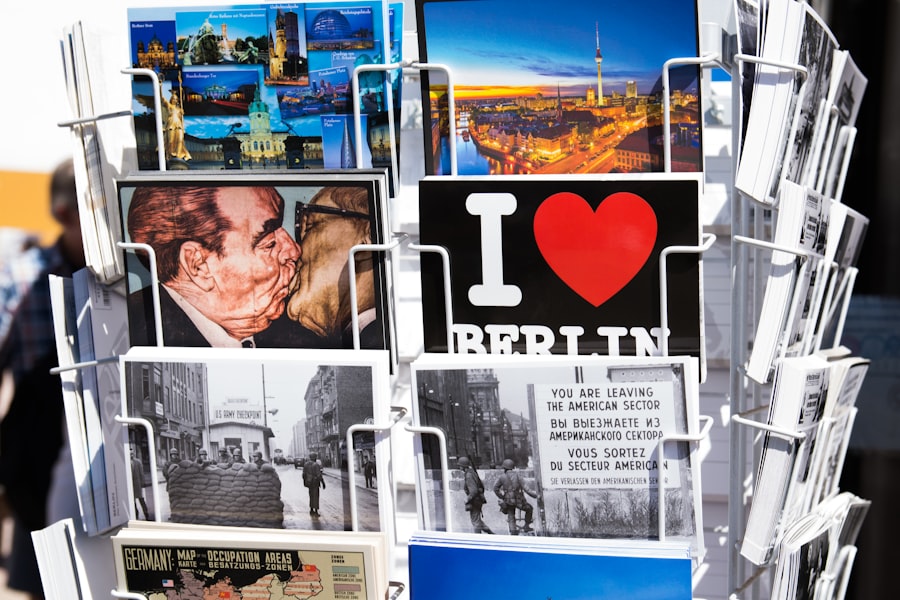
Proper preservation is essential for maintaining the integrity and longevity of vintage postcards. Exposure to light, humidity, and temperature fluctuations can lead to fading colors and deterioration over time. To protect these delicate items, collectors should store postcards in acid-free sleeves or albums designed specifically for archival purposes.
This not only safeguards them from physical damage but also prevents exposure to harmful environmental factors. When it comes to displaying vintage postcards, creativity can enhance their visual appeal while ensuring their protection. Framing postcards behind UV-protective glass can create stunning wall art while preserving their condition.
Alternatively, collectors may opt for shadow boxes that allow for three-dimensional displays without direct contact with light or air. Regardless of the method chosen, careful consideration should be given to how postcards are handled and displayed to ensure they remain cherished artifacts for years to come.
Popular Themes and Designs
The themes and designs found in vintage postcards are as diverse as the eras they represent. One enduring theme is travel; postcards featuring exotic locations or famous landmarks have long been popular among tourists seeking to capture memories of their journeys. These cards often showcase breathtaking landscapes or architectural marvels that evoke wanderlust in viewers.
For example, Art Deco-style postcards from the 1920s often depict glamorous destinations like Miami Beach or Paris. Another prevalent theme is holiday celebrations; vintage postcards featuring Christmas scenes or Halloween motifs are particularly sought after during their respective seasons. These cards often feature whimsical illustrations that capture the spirit of the holiday while providing insight into cultural traditions of the time.
Additionally, many vintage postcards reflect social issues or movements; cards promoting women’s suffrage or civil rights serve as poignant reminders of historical struggles and triumphs.
Where to Find Vintage Postcards
For those interested in starting or expanding their vintage postcard collection, numerous avenues exist for sourcing these treasures. Antique shops and flea markets are often goldmines for finding unique postcards that may not be available online. Many vendors specialize in ephemera and can provide valuable insights into the history and significance of various cards.
Online platforms have also revolutionized postcard collecting; websites like eBay and Etsy offer vast selections from individual sellers around the world. Collectors can browse through thousands of listings based on specific criteria such as theme, era, or condition. Additionally, dedicated postcard shows and conventions provide opportunities for collectors to meet face-to-face with other enthusiasts while discovering rare finds from specialized dealers.
In conclusion, vintage postcards represent more than just collectible items; they are windows into history that allow us to connect with our past in meaningful ways. Whether through exploring their rich history, understanding their value in today’s market, or appreciating their artistic designs, collectors find joy in every aspect of this unique hobby.